
A bouquet can catch your attention before you have identified a single flower. Sometimes it is the full cluster of blooms. Sometimes it is a branch reaching sideways, a long leafy edge or the way the arrangement falls below the hands carrying it.
For couples collecting wedding-flower ideas, shape offers a useful starting point. These photographs from real weddings at Stone Ridge Estates in Pasco, Washington, show several ways flowers can fill a frame. They are individual wedding examples, not a list of flowers or arrangements included with a venue booking.
Look at the outline before the ingredients
Try looking at a favorite bouquet photograph from a little farther away. What do you notice first: a rounded mass of flowers, an uneven outline, a wide sweep or a length of greenery extending downward? That first impression gives you something concrete to discuss with a florist, even if you do not know the names of the flowers.
In one close portrait from the Stone Ridge gallery, a bride is surrounded by several bouquets. The flowers are clustered closely, with large rounded blooms sitting beside smaller textures. The photograph is a striking example of fullness. Because several arrangements fill the frame, it should not be used as a measurement of one bouquet or as a promise that a single arrangement will create the same effect.
If that is the image you love, the useful description might be: “I like how closely the flowers sit together, and how little empty space there is between the blooms.” That tells your florist more than simply asking for something romantic.
Leave room for an uneven edge
In Kaitlin Moor Photography’s garden portrait, the bride holds a bouquet while another person kisses her cheek. Leaves extend sideways, and textured stems fall below the main flowers. The arrangement has a center, but its outer edge is allowed to wander.
That is a different kind of fullness. You may be drawn to the flowers at the center while also enjoying the space around the longer stems. When you show a florist this kind of reference, point out which part matters: the width, the leafy edges, the downward movement or the mix of lengths. Those are separate decisions, and you do not have to choose every element in the photograph.
The documented décor credit for this wedding is The High Heel Housewife. That credit does not establish who made the bouquet; we are not assigning floral authorship from the photograph.
See what creates the trailing effect
Media Mason’s detail photograph places pale flowers and greenery prominently in front of a couple and a motorcycle. The upper flowers form a substantial cluster, while leaves extend below and around it. The bouquet is visually important even though the people are farther back in the composition.
When you save an arrangement that trails, ask yourself what you are actually responding to. Is it a long line of flowers, foliage reaching below the blooms, or ribbons? Each can produce a different effect. In this example, the visible greenery is an important part of the outline. The photograph is inspiration for that shape, not a construction diagram or a record of the bouquet’s weight.
You can ask a florist to explain how the finished arrangement would be held, how much of it would sit below your hands and which materials they would suggest for the effect. Those questions help translate a photograph into something you can picture carrying.
Fullness can spread sideways, too
Foto Ruby Photography’s garden portrait shows two people holding bouquets. The larger arrangement has broad flowers across its upper half, leafy edges and textured stems hanging below. The smaller bouquet beside it makes the difference in scale especially easy to see.
This is useful inspiration if you like a generous arrangement but do not want to describe your preference only as “big.” Width, depth and trailing length can each contribute to that impression. Tell your florist which dimension appeals to you, and which parts of your outfit you would still like visible when the flowers are held in front.
There is no need to copy the exact arrangement. You might love its width while preferring a shorter finish, or like the loose lower edge while wanting fewer large blooms. A reference photograph works best when you can explain what you would keep and what you would change.
Compare the bouquet with a whole-person photograph
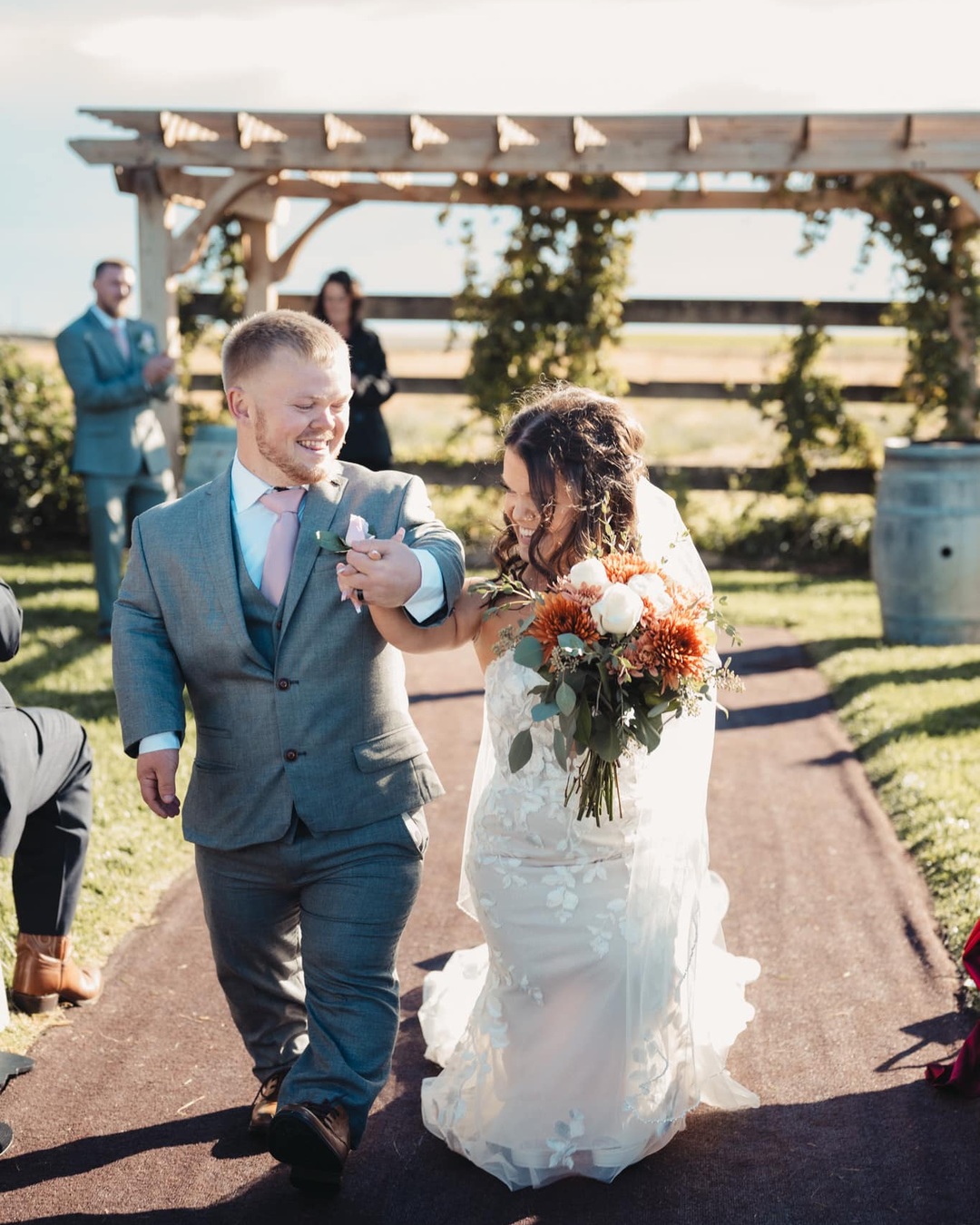
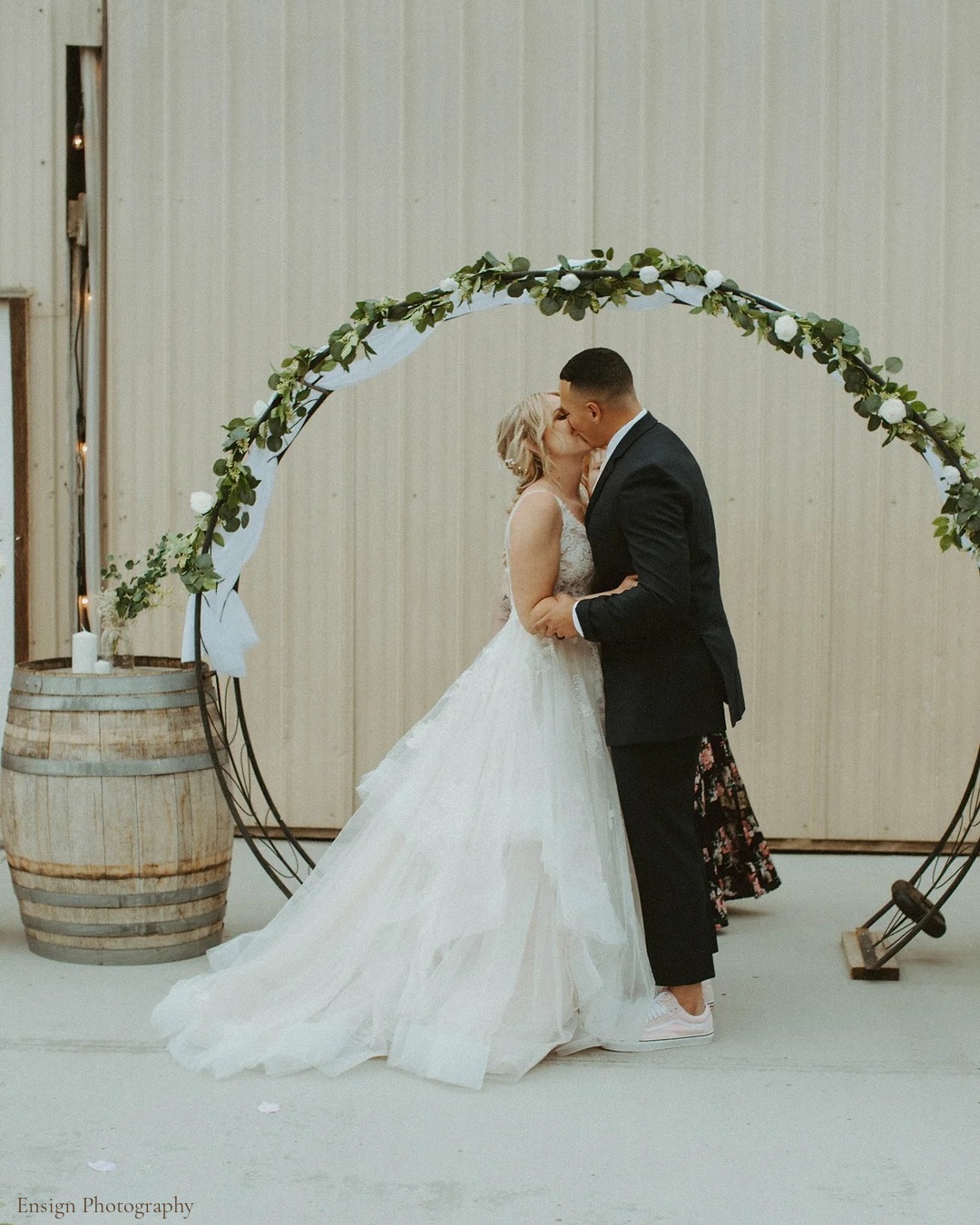
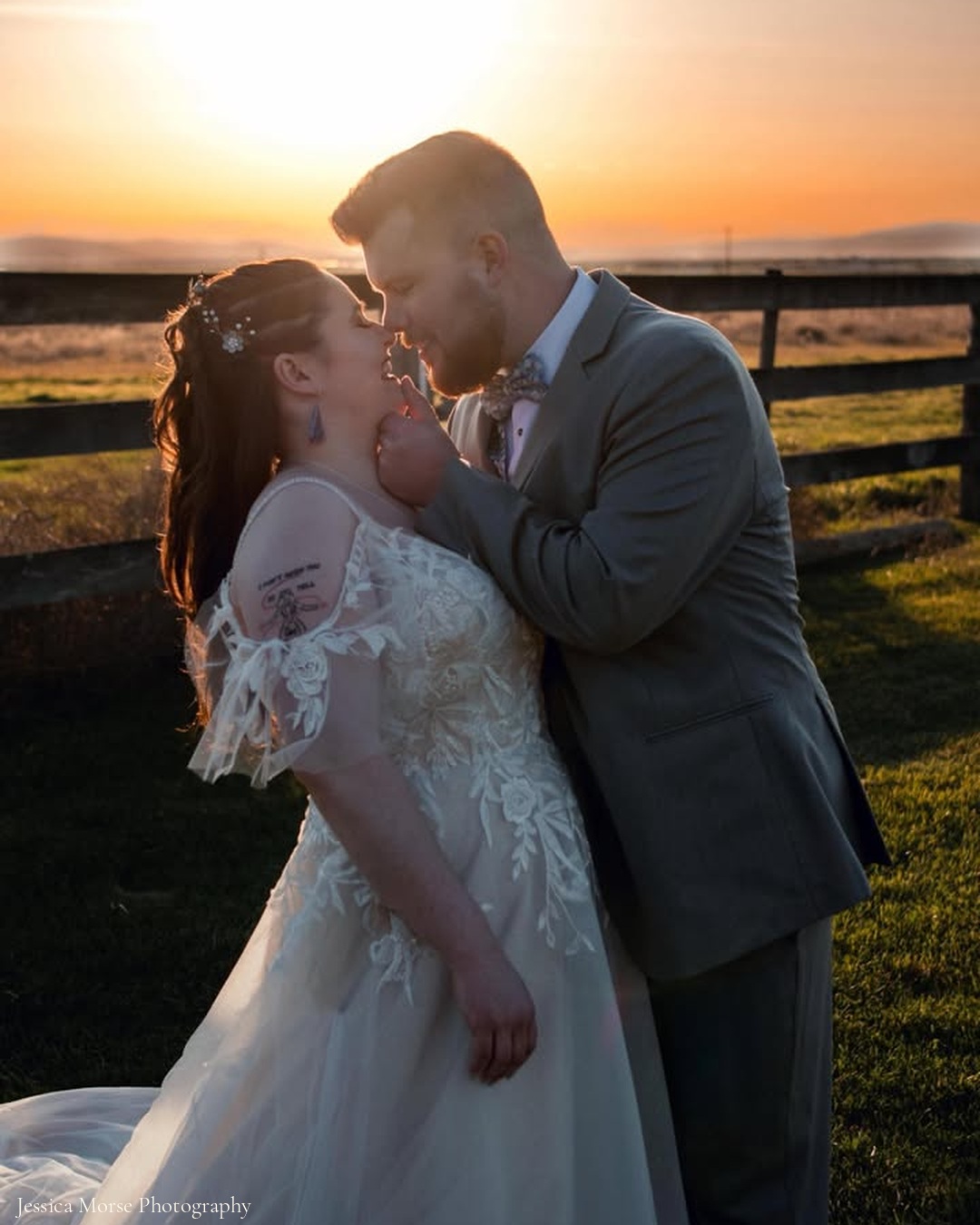
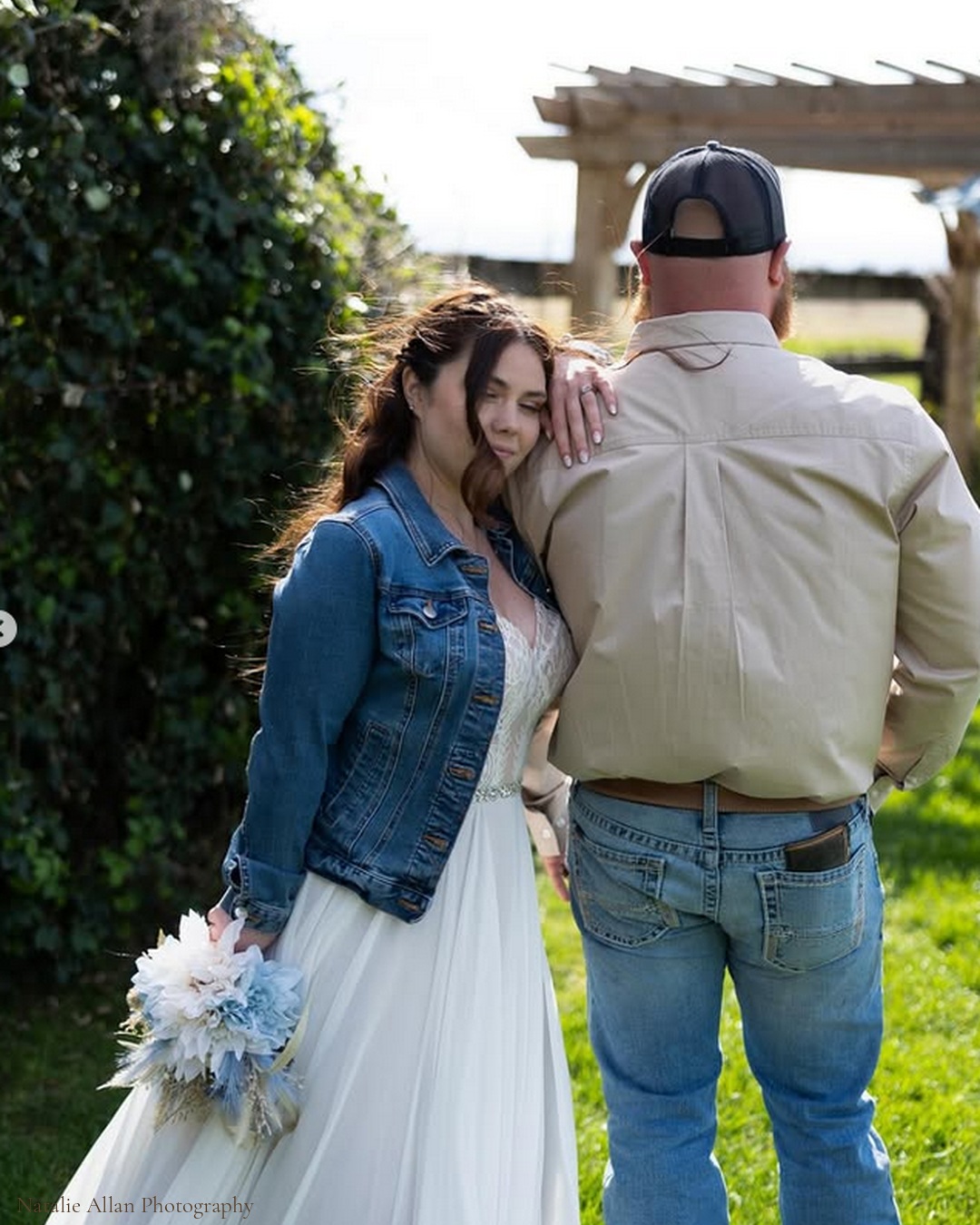
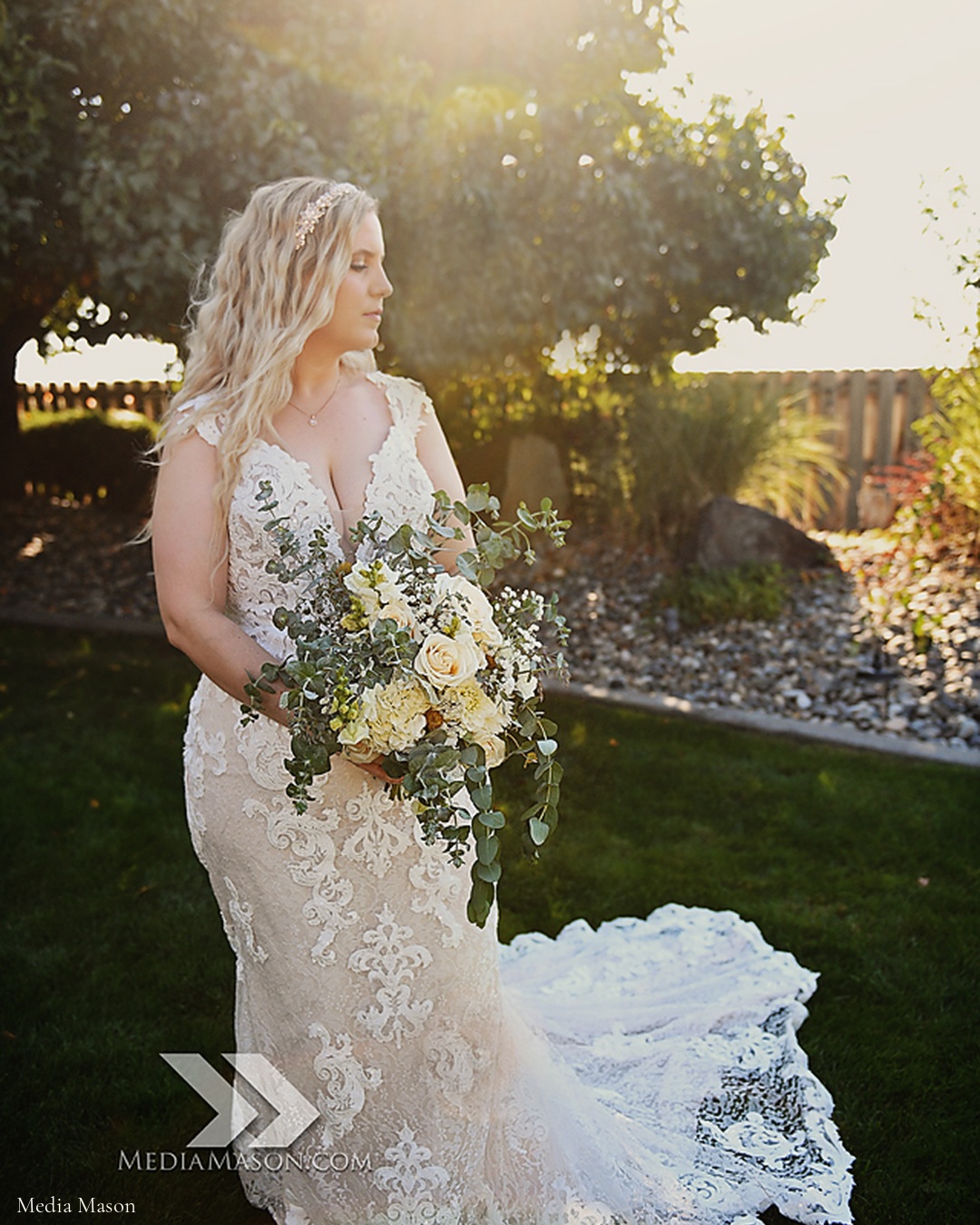
A close-up is useful for seeing petals and stems. A portrait helps you picture the flowers beside an outfit and another person. The accompanying Stone Ridge wedding photographs include a bride holding flowers in the garden, a couple walking from their ceremony, a portrait with a denim jacket and couples standing close together. They show why it helps to look beyond a detail crop before deciding on scale.
Try saving one close-up and one whole-person photograph for your flower conversation. Tell your florist what attracts you to each. Ask how the size and shape would translate to your plans, and have them confirm the materials, cost and handling details for the arrangement they propose. These are general planning suggestions, not services or outcomes established by the photographs.
Bring a preference, not a perfect replica
You do not need a complete flower vocabulary before asking for help. A short description can be enough to start: closely gathered blooms, an open leafy edge, a wide arrangement or a trailing finish. Add the things you would change in your reference image, then let the professional supplying your flowers explain what is possible.
The useful question is simple: when you imagine carrying your bouquet, which outline feels like yours?
Photography in the floral examples: [Kaitlin Moor Photography](https://www.instagram.com/kaitlinmoor.photo), Media Mason and Foto Ruby Photography. Décor for the wedding shown in Kaitlin Moor Photography’s example: [The High Heel Housewife](https://highheelhousewife.com). Individual article-image credits remain attached to their own images.
Explore [Venue Match](https://match.stone-ridge-estates.com) and [Pricing & Packages](https://stone-ridge-estates.com/pricing-packages) as you consider your Stone Ridge celebration.